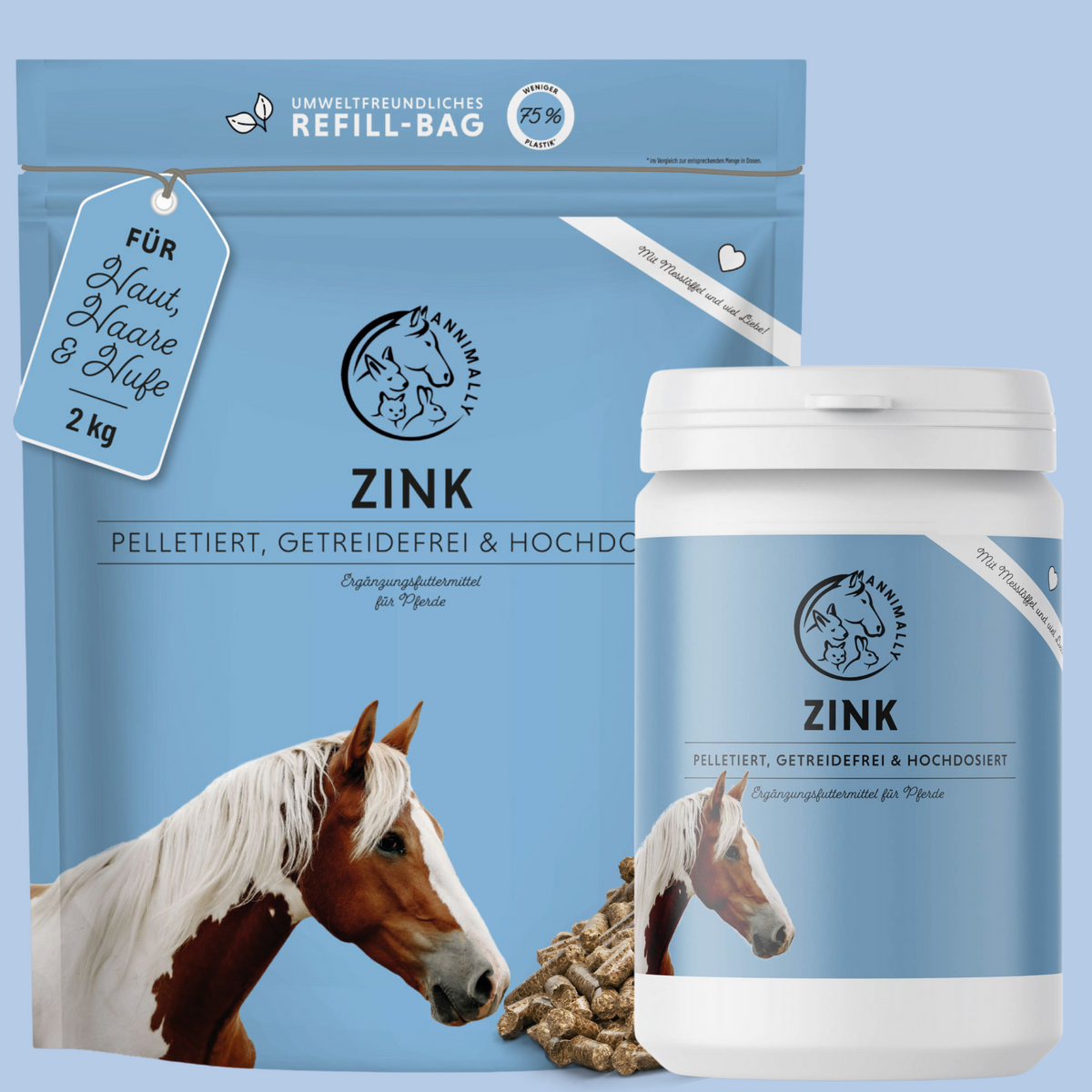
Zinc in horses: Why zinc is so important for your horse
Zinc is one of the most important trace elements in horse nutrition – and yet it is frequently underestimated. Whether it's shedding, hoof health, the immune system, or wound healing – the importance of zinc for your horse's organism is enormous.
In this article, you will learn everything about zinc supply, how to prevent a zinc deficiency in your horse, and the role that dietary supplements, vitamin E, selenium, and other trace elements play in this process.
Why zinc is indispensable for your horse
Zinc is one of the so-called essential trace elements. This means that your horse's body cannot produce zinc itself – it must be obtained through food.
As a component of more than 200 enzymes, zinc is involved in numerous metabolic processes – including liver metabolism, skin and coat metabolism, cell division, and immune system function.
So, if you want your horse to have a shiny coat, strong hooves, and stable health, you should definitely ensure an adequate supply of this important trace element.
How to recognize a zinc deficiency in your horse
A zinc deficiency in horses often manifests gradually. Many symptoms are non-specific but still need to be taken seriously. The most common signs include:
-
Poor, dull, or scaly coat
-
Skin problems such as eczema or mud fever
-
Poor shedding
-
Brittle, soft, or cracked hooves
-
Frequent infections or poor wound healing
-
Growth disorders (especially in young horses)
-
Poor general condition
These symptoms can also indicate other deficiencies in trace elements or vitamins – but zinc is often a decisive factor.
How much zinc does your horse need?
A horse's zinc requirement depends on various factors:
-
Body weight
-
Age
-
Housing conditions
-
Performance
-
Feeding
The average zinc requirement is about 400–500 mg of zinc per kg of dry matter per day for a 600 kg horse. In this context, not only the quantity but also the bioavailability is crucial – i.e., how well the zinc can be absorbed by the body.
Zinc sources in horse feeding
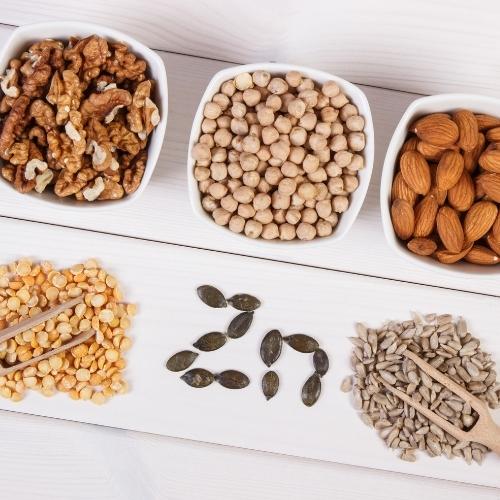
Not every feed automatically contains sufficient zinc. Grains such as oats, barley, or corn contain zinc, but often not in sufficient quantities and, above all, in a form that is difficult to utilize. Hay and forage also often show low zinc levels due to modern agriculture and depleted soils.
In addition, zinc losses through sweat, stress, or illness can further increase the requirement. That is why many horse owners turn to a dietary supplement to ensure an adequate supply.
Organic or inorganic zinc?
In dietary supplements, a distinction is made between organic and inorganic zinc compounds:
-
Organically bound zinc (e.g., glycine zinc chelate hydrate) has a higher bioavailability and is better absorbed by the organism.
-
Inorganic zinc, such as zinc oxide, is cheaper but is often utilized less effectively.
So, if you want the best possible zinc supply for your horse, look for high-quality ingredients and the type of zinc compound.
Other important nutrients in combination with zinc
Zinc does not work in isolation. It unfolds its effect particularly effectively in combination with other trace elements and vitamins:
-
Vitamin E supports cell health and the immune system.
-
Vitamin C promotes zinc absorption and also strengthens the body's defenses.
-
Selenium has an antioxidant effect and protects cells from damage.
-
B vitamins are essential for metabolism and nerve function.
Ensure that your mineral feed or dietary supplement contains a balanced ratio of these substances.
How you can improve your horse's zinc status
1. Analyze your forage
Have your hay regularly tested for zinc content, selenium, and other trace elements. This is the only way to determine your horse's actual needs.
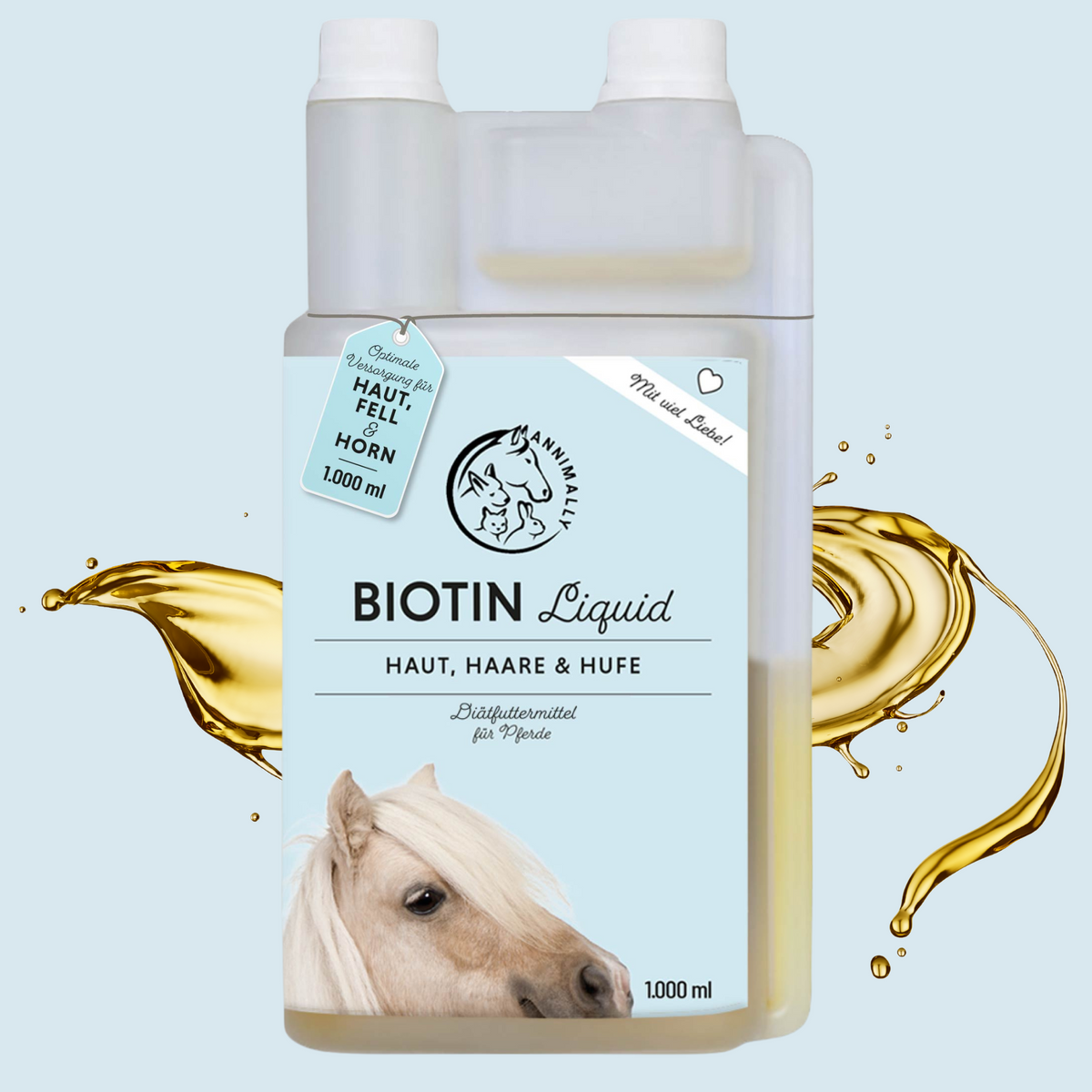
2. Choose the right dietary supplement
A good product should have the following characteristics:
-
Contains at least 500 mg of zinc per kg
-
Preferably in organic form (e.g., glycine zinc chelate hydrate)
-
Free of sugar, molasses, and unnecessary additives
-
Anti-doping compliant for competition horses
-
Balanced combination with vitamin E, selenium, and other trace elements
3. The correct dosage
The dosage depends on your horse's individual needs. As a rule of thumb: per kg of body weight, approx. 1 mg of zinc in addition to the basic supply – significantly more in case of deficiency symptoms. When in doubt, talk to your veterinarian or equine nutritionist.
When is a dietary supplement sensible?
This is particularly sensible:
-
In the case of a proven zinc deficiency
-
During shedding
-
For skin problems, mud fever, or eczema
-
Under high strain (e.g., sport horses)
-
After illness or surgery to support wound healing
-
To promote hoof quality
It is important that you choose a high-quality product and monitor its use regularly.
Zinc deficiency: The hidden danger in horse nutrition
A chronic zinc deficiency can have serious long-term consequences for your horse's life. This condition is often recognized only late – when visible damage to the coat, skin, and hooves has already occurred.
Furthermore, a lack of zinc can interfere with the absorption of other trace elements and unbalance the entire metabolism. The result: increased susceptibility to infection, poor liver values, and a weakened immune system.
Zinc Check: Do any of these points apply to you and your horse?
Your horse is currently shedding:
Especially during shedding, your horse's body requires increased levels of zinc. This trace element plays a central role in the renewal of skin and hair cells, thus supporting the smooth functioning of this natural process.
Skin problems are appearing or the hooves are brittle:
If your horse suffers from mud fever, eczema, itching, or brittle, soft hooves, this can be a clear sign of a zinc deficiency. Zinc is essential for healthy skin structures and solid hoof formation.
Your horse is trained regularly or is under stress:
Performance, tournament training, transport, or even changes in housing mean stress for the horse's organism – and increase the need for zinc because more of it is used up and excreted.
You feed mainly grain-free forage:
Rations that consist mainly of hay or straw and contain no grain often do not provide enough zinc. In addition, the zinc from such feeds is often less bioavailable – meaning it is harder for the body to utilize.
You have not yet had your hay or forage analyzed for zinc content:
Only through precise feed analysis do you know how much zinc your horse is actually receiving through its forage – and whether additional supplementation is necessary.
You are not currently using a high-quality mineral feed or dietary supplement:
Without the targeted supplementation of zinc via a well-balanced product, a deficiency can quickly occur. This is especially true when there is an increased requirement or poor feed quality.
Conclusion: Without zinc, nothing works in a horse
Zinc is not just another element among many – it is a key player in your horse's metabolism. From the skin to the immune system and wound healing: the effects of a zinc deficiency can be diverse and serious.
Pay attention to the quality of the feeding, regularly analyze your forage, and rely on proven, high-quality dietary supplements with optimal dosage. This ensures the health, performance, and well-being of your horse – and gives them a strong, shiny, and long life.