
Carrots for horses – Why carrots are more than just a tasty snack
If you are a horse owner, you have surely asked yourself at some point whether and how many carrots you can feed your horse. After all, the bright orange root is not only a healthy vegetable for us humans, but also highly coveted by horses. Whether as a reward, a snack, or even as a dietary supplement – carrots have become an essential part of many stables. But what makes the carrot so special for horses? And what should you watch out for when feeding carrots?
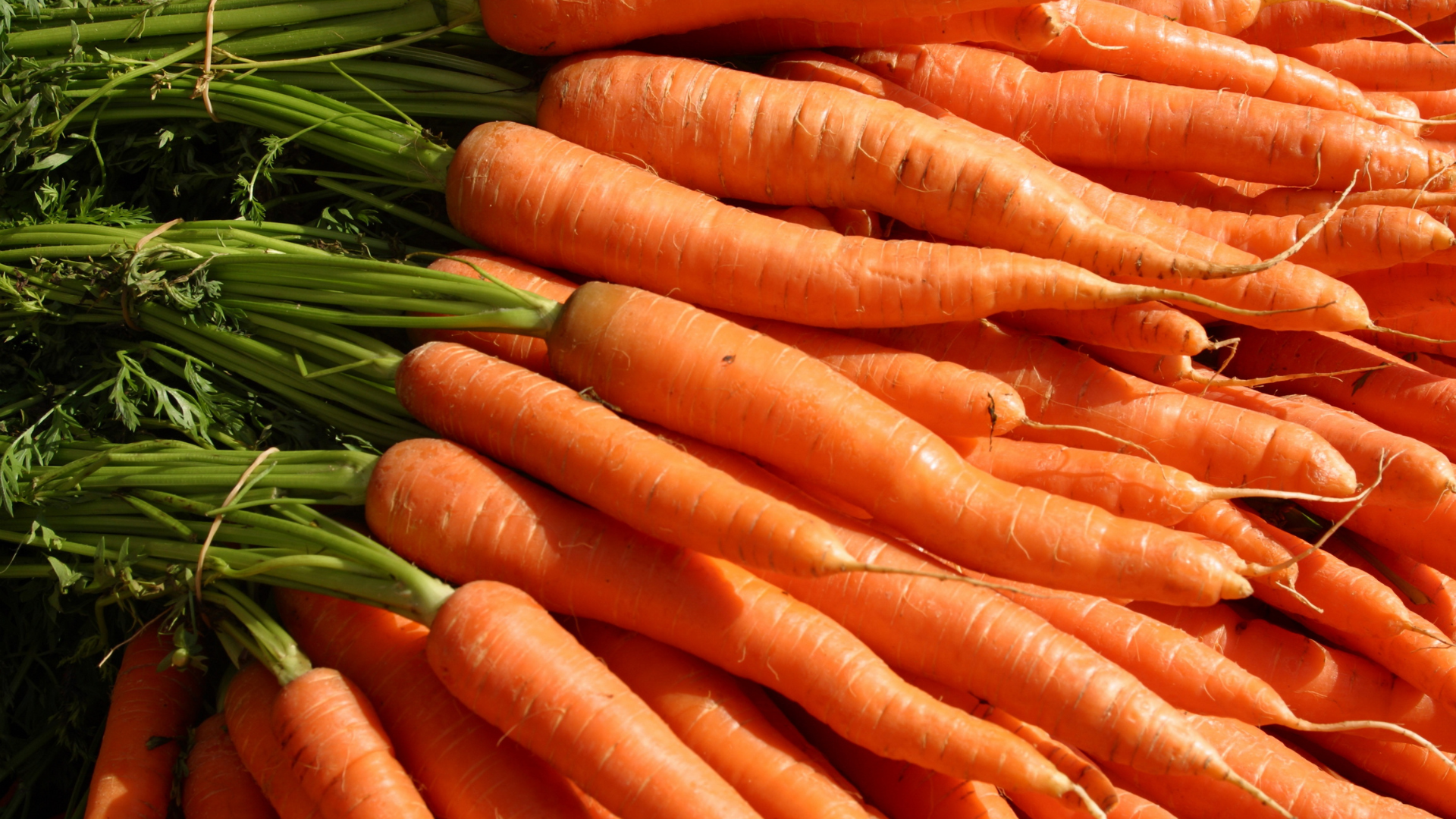
The carrot – A popular root vegetable for horses
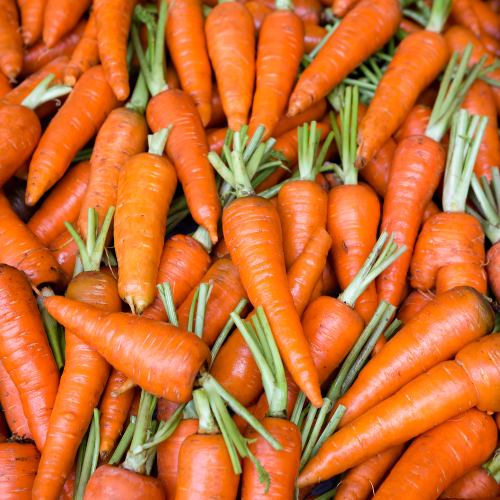
Carrots are among the most popular snacks for horses. Their natural sweetness, pleasant taste, and crunchy consistency make them a real favorite treat. It is not uncommon for carrots to be the first vegetable young horses ever eat.
But there is more to it than just the delicious taste: carrots contain many vitamins, above all beta-carotene, which is converted into vitamin A in the body. This is especially important for your horse's skin, mucous membranes, immune system, and eyesight. But potassium, magnesium, calcium, zinc, and iron also make this root vegetable a valuable part of their diet.
Carrots as a snack or dietary supplement?
Many horse owners give their animals carrots as a reward or occasional snack – that is perfectly fine. But you can also use carrots specifically as a dietary supplement, for example in cases of:
-
Loss of appetite – The sweet taste can stimulate feed intake.
-
Immune system problems – Thanks to the vitamins and minerals they contain.
-
Animals with sensitive digestion – Carrots are easily digestible.
-
Winter feeding – Fresh grass and pasture time are lacking in winter, and carrots provide variety here.
Especially in the cold season, when there is no fresh greenery in the pastures, carrots can be a healthy addition. Their high water content also supports digestion – which is a crucial point for horses in particular.
How many carrots can a horse eat?
This is where it gets interesting. Because even though carrots are healthy, you shouldn't overdo the amount. A balanced diet is essential. Carrots contain sugar, and too much of it can lead to long-term problems – especially in horses with metabolic diseases such as Cushing's or EMS (Equine Metabolic Syndrome).
The rule of thumb is:
👉 1 to 2 kilos of carrots per day are safe for a healthy, large horse.
👉 For ponies, or horses with EMS or Cushing's, it is better to stick to small amounts (about 1-2 carrots per day).
The exact amount depends on various factors: the horse's weight, its general diet, its state of health, and, of course, whether you are also giving it carrot pellets or other types of vegetables.
Carrot pellets – the practical alternative
Don't have fresh carrots on hand? No problem – there are carrot pellets as an alternative. These consist of dried, pressed carrots and are particularly practical to store. They are excellent as a supplement to hay or as an ingredient in daily feed.
When buying, look for high-quality products – ideally organic carrots with no additives and as little sugar as possible. Good carrot pellets have an intense flavor and still contain plenty of vitamins and minerals.
You can feed them dry or soak them in water. Soaking is particularly helpful for older horses or those with dental problems.
Are carrots suitable for all horses?
In principle yes, but there are exceptions. As already mentioned, you should be very careful with horses that have laminitis, Cushing's, or EMS. The sugar they contain can be problematic here – even in small quantities.
Carrots should also only be fed in limited quantities to horses that gain weight very easily or are already struggling with being overweight.
Keep in mind: even though carrots are the opposite of grain – meaning they are rather light and healthy – they still contain calories. And every piece counts, especially if you give your horse carrots regularly.
Oil and carrots – a good combination?
You may have heard that you should add oil to carrots to improve the absorption of beta-carotene. That is correct – because vitamin A and its precursors are fat-soluble. A few drops of high-quality vegetable oil (e.g., linseed oil or sunflower oil) can support their utilization in the body.
However, you should keep the amount reasonable here too. Too much oil puts a strain on the digestive tract. One teaspoon per serving of carrots is perfectly sufficient.
Carrots compared to other vegetables
The carrot holds a special position in horse feeding. Compared to other vegetables such as turnips, apples, or celery, it is particularly low in calories but rich in valuable nutrients. At the same time, it is particularly tasty for most horses – a real plus in daily feeding.
Nevertheless, it makes sense to provide variety from time to time. A little celery, beetroot, or parsnip can provide variety – always in moderation, of course.
Growing carrots – is it worth it?
If you have the time, space, and desire, you can even grow carrots yourself. This is not only sustainable, but you also know exactly what you are feeding your horse. Organic carrots from your own garden are a great alternative to supermarket goods.
Carrots thrive in loose, deep soil. Make sure you don't use any chemical agents – after all, you want your horses to be able to eat the vegetables without any concerns.
Conclusion: Carrots are more than just a treat
The carrot is a great addition to a horse's daily ration. It provides your animal with important vitamins, tastes excellent, and is versatile – whether as a snack, a reward, or a healthy dietary supplement in winter. With carrot pellets, you even have a practical alternative on hand when fresh vegetables are not available.
But as with everything in horse feeding, the amount makes all the difference. Pay attention to your horse's individual needs, especially if it has underlying conditions such as Cushing's, EMS, or laminitis.
If you are unsure, it is best to speak to your veterinarian or a qualified equine nutritionist. This ensures that your horse is optimally cared for – with everything it needs. And a small carrot as a reward? That should, of course, never be missing.