
Clipping a dog's nails: How to do it stress-free
Your dog's claws are too long if they touch the ground when standing or click on tiles and parquet. Then you should trim them, in small steps and always a little before the vascular part of the claw. Many dogs need this every four to eight weeks, while others wear their claws down almost on their own by walking on asphalt. In this guide, you will learn how to recognize claws that are too long, which tool is suitable, and how to trim them even with an insecure dog.
Why are short claws important for dogs?
Dog claws grow throughout their lives. Normally, they wear down when walking. If your dog walks mainly on soft surfaces such as grass, forest soil, or carpet, the wear and tear is often not enough.
Claws that are too long can have various consequences:
- The dog places its paw differently and changes its gait.
- Claws can get caught and tear or break.
- Especially the dewclaws, also known as wolf claws, can curl and grow into the pads.
- On smooth floors, your dog has less grip and slips more easily.
How can you tell if the claws are too long?
A simple test: Place your dog on a hard, level surface and look at it from the side. The claws should not touch the ground when standing, or only very slightly. Other signs are:
- a noticeable clicking sound when walking on tiles or laminate
- claws that visibly bend downwards or to the side
- spread toes when your dog stands
- dewclaws that curl towards the paw
How often should a dog's claws be trimmed?
There is no fixed rule. How often you need to trim the claws depends on age, breed, weight, and above all, the surface on which your dog walks.
| Dog type | Typical interval |
|---|---|
| Walks a lot on asphalt and paving stones | seldom necessary, check claws regularly |
| Walks a lot on grass, forest and soft ground | about every 4 to 8 weeks |
| Older or less active dogs | often every 3 to 6 weeks |
| Small and light dogs | more often, because they hardly wear down their claws |
| Dewclaws (wolf claws) | check regularly, as they never touch the ground |
It is best to check the claws every two weeks, for example when brushing. This way you will notice in good time when it is time again.
What tool do you need?
For trimming a dog's claws, only tools specifically designed for dog claws are suitable. Human nail scissors crush the claw and can cause it to splinter.
- Claw nippers with cutting action: The classic, good for medium and large dogs and for thick claws.
- Guillotine claw nippers: The claw is inserted into an opening and trimmed with a blade. Practical for small to medium dogs.
- Claw grinder: An electric device that grinds the claw down bit by bit. Well suited if you are afraid of cutting, but your dog must first get used to the noise.
- File: For smoothing sharp edges after cutting.
Also prepare treats, a towel, and some styptic powder or clean cotton wool in case you cut too far.
How far can a dog's claws be trimmed?
Every dog claw contains the so-called quick, an area with blood vessels and nerves. If it is injured, the claw bleeds and it hurts your dog. Therefore, the rule is: better cut off a small piece several times than too much at once.
- Light claws: Here you usually see the quick as a pink area. Cut about two to three millimeters before it.
- Dark claws: The quick cannot be seen from the outside. Trim only the tip, millimeter by millimeter. If a dark, moist spot appears in the middle of the cut surface, stop.
Important to know: In claws that have been too long for a long time, the quick grows forward. You cannot cut it short all at once, but only gradually over several weeks. The quick slowly recedes.
Trimming a dog's claws: step by step

- Choose a calm moment: Ideally after a walk, when your dog is relaxed and a little tired.
- Find a good position: You can put small dogs on your lap or a non-slip table, while large dogs are best laid on their side.
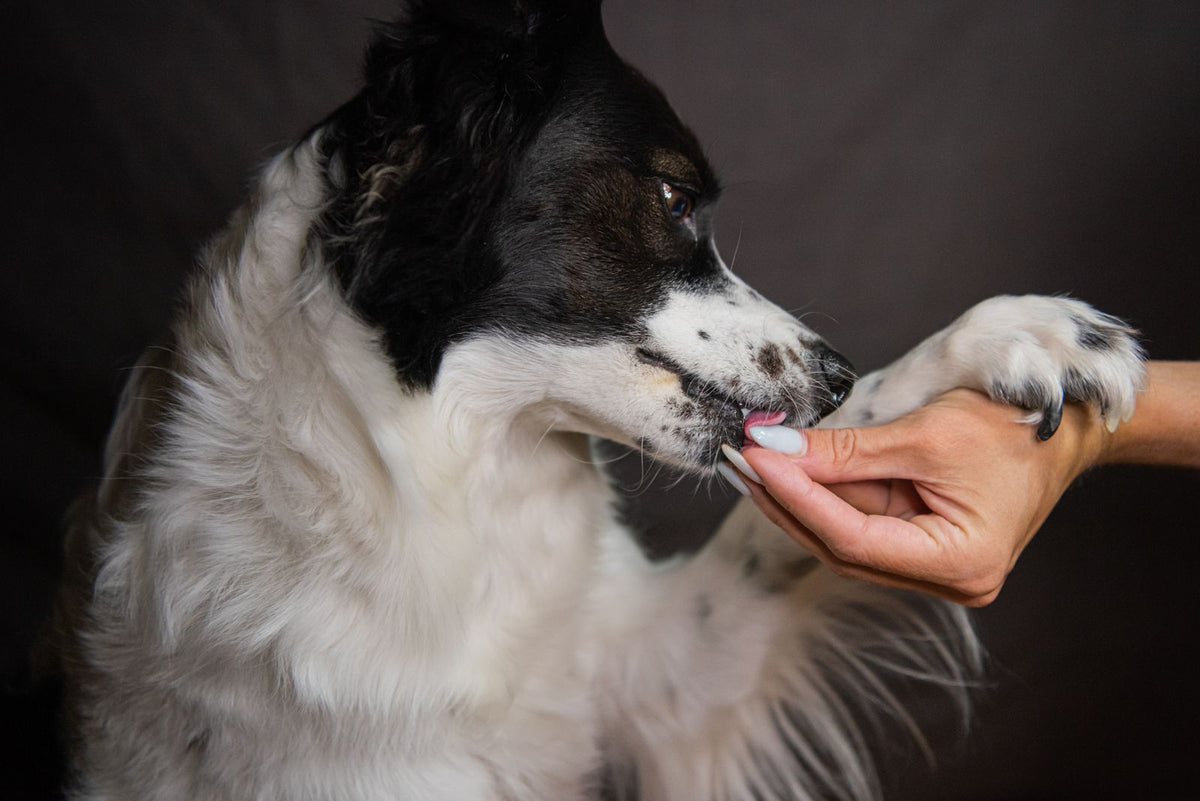
- Hold the paw securely: Take the paw firmly but gently in your hand and push the fur between the toes back a little.
- Check the claw: Look at where the quick is located and place the nippers a little before it.
- Cut short and straight: Cut quickly in one go, approximately parallel to the ground. Do not press or crush.
- Do not forget the dewclaws: They are located slightly higher on the inside of the paw, and some dogs also have them on their hind legs.
- Smooth the edges: Use a file or grinder to round off sharp edges.
- Praise and reward: Give a treat after each claw or paw.
You do not have to manage all the claws at once. Especially at the beginning, it is enough to trim one paw per day.
What to do if the claw bleeds?
This can happen even to experienced dog owners. Stay calm, because your tension will transfer to your dog. Press some styptic powder or clean cotton wool on the claw for a few minutes. In most cases, the bleeding stops quickly. If it does not stop, the claw is torn, or your dog seems severely affected, call your veterinarian's office.
Tips for dogs that do not like having their claws trimmed
Many dogs do not like having their paws touched. This can be practiced with patience:
- Start early: Get puppies used to having their paws touched playfully, even if nothing needs to be trimmed yet.
- Practice in small steps: First touch the paw, then show the nippers, then touch a claw, and reward each step.
- Short sessions: Better one minute every day than a long procedure once a month.
- Second person: Someone who holds your dog, scratches it, or distracts it with a lick mat makes things much easier.
- Get help: If your dog is very afraid or resists, have the claws trimmed at the veterinarian's office or by a dog groomer.
Paw care after trimming the claws
If you already have the paws in your hand, a quick paw check is worth it: Are the pads clean, has something gotten stuck between the toes, is the fur very long there? You can carefully trim long fur between the pads with rounded scissors. Especially in winter or after long walks, the pads will appreciate some care, for example with our paw balm with shea butter, calendula oil, and beeswax. You can find more tips for the cold season in our article Winter with a dog: What you need to pay attention to.
Frequently asked questions about trimming a dog's claws
How often should a dog's claws be trimmed?
It varies greatly. Many dogs need it about every four to eight weeks. Dogs that walk a lot on asphalt wear down their claws more and need it less often. It is best to check the claws every two weeks.
How far can I trim my dog's claws?
Only up to just before the quick, i.e., the vascular part of the claw. On light claws, you see it as a pink area, on dark claws you trim only the tip in small steps.
How much does trimming a dog's claws cost at the veterinarian?
This depends on the practice, the region, and the effort involved. Often, the price is around 10 to 30 euros, but if an examination is added, it will be more expensive. It is best to ask your veterinarian's office beforehand. Many dog groomers also offer claw trimming.
From what age can a puppy's claws be trimmed?
Puppy claws are very sharp and can be trimmed as early as the first weeks of life, usually a small pair of claw nippers is sufficient for this. Much more important is that your puppy learns early on that touching the paws is something pleasant.
Is a claw grinder better than nippers?
Both have advantages. With the grinder, you injure the quick less often and the edges become smooth, but it takes more time and some dogs do not like the noise. The nippers are faster and quieter. Many owners combine both.
Conclusion: Check regularly, trim in small steps
Trimming a dog's claws is not rocket science. If you check the claws regularly, use the right tool, and always only take off a small piece, it will quickly become a routine for both of you. With patience, treats, and short practice sessions, even an insecure dog will learn that paw care is nothing bad. And if you are unsure, your veterinarian's office will be happy to help you.