

Kennel cough in dogs – causes, symptoms, transmission, treatment and prevention
The term kennel cough in dogs causes uncertainty for many dog owners. As soon as your dog suddenly starts coughing—perhaps with a dry, barking, or gagging sound—the worry quickly arises that it could be a contagious disease. In fact, kennel cough is one of the most common infectious respiratory diseases in dogs. There is an increased risk of infection, especially where many animals gather—such as in animal shelters, boarding kennels, dog training schools, at dog shows, or in dog sports.
In this comprehensive guide, you will learn everything you need to know about kennel cough, also known as infectious tracheobronchitis or canine flu. We clarify the term, explain the causes and pathogens, describe typical symptoms, address contagion and risks, and show you how treatment works. You will also learn about the role of vaccination and how you can best protect your four-legged friend in everyday life.
What is kennel cough in dogs?
Kennel cough is the colloquial term for a complex of upper respiratory tract diseases in dogs. Medically, it is referred to as infectious tracheobronchitis. The term itself describes what is involved: an infectious inflammation of the trachea and the bronchi. It is not a single disease, but an infectious disease that can be triggered by various viruses and bacteria.
The name "kennel cough" originates from a time when the disease occurred primarily in kennels—that is, in environments where many dogs were kept in close quarters. Today, it is known that kennel cough in dogs can develop anywhere there is contact with other dogs. In many cases, a quick sniff is enough to transmit an infection.
Kennel cough is generally benign, but depending on the cause, immunity, and the dog's general condition, the severity can vary. In some cases, complications such as pneumonia or a secondary infection occur.
Why is kennel cough so contagious?
Kennel cough is considered one of the highly contagious diseases in dogs. The reason for this lies in the way it is transmitted. The pathogens are mainly spread through droplet infection. When coughing, sneezing, or barking, tiny droplets containing viruses or bacteria are released into the air. Other dogs pick these up through the air or via their mucous membranes.
Indirect contact also plays a major role. Dog toys, water bowls, leashes, collars, or even human clothing can transmit pathogens. The risk of infection increases significantly, especially in closed rooms with poor air circulation.
Contact with other dogs is therefore the most important risk factor. Dog training schools, dog sports, boarding kennels, animal shelters, and dog shows are considered classic locations where kennel cough spreads rapidly among dogs.
Which pathogens cause kennel cough?
Kennel cough is not triggered by a single pathogen, but by an interplay of various viruses and bacteria. This is why it is also referred to as a disease complex.
The most important viruses include:
-
Canine Parainfluenza Virus (CPIV, also called CPIV 2)
-
Canine Adenovirus Type 2 (CAV 2)
-
Herpes virus
-
Reovirus
-
Morbillivirus
-
Para Influenza Virus
These viruses attack the mucous membranes of the respiratory tract and weaken local defenses. This paves the way for bacterial pathogens.
The most common bacteria include:
-
Bordetella bronchiseptica
-
Mycoplasma
Bordetella bronchiseptica plays a particularly significant role and is one of the best-known pathogens of kennel cough in dogs. In many cases, there is a mixed infection of viruses and bacteria. It is precisely this interplay that makes the course of the disease so variable.
Causes and development of the disease
The cause of kennel cough is always an infection of the respiratory tract. However, whether your dog actually becomes ill depends on several factors. The immune system plays a central role here. A healthy dog with stable immunity can often ward off pathogens without developing symptoms. However, if the immune system is weakened, the risk increases significantly.
Possible reasons for a weakened immune system include:
-
Stress, for example, from a stay at a boarding kennel or animal shelter
-
Many new impressions, such as at dog shows or in dog sports
-
Young age, as puppies do not yet have full immunity
-
Previous respiratory diseases
-
Cold, drafts, and humid air
-
Poor hygiene in communal facilities
Mechanical pressure on the throat, such as from a collar that is too tight or strong pulling on the leash, can also increase the coughing reflex and irritate the mucous membranes. While this is not the reason for the disease itself, it can worsen the symptoms.
Typical symptoms of kennel cough in dogs
The primary symptom of kennel cough is coughing. It usually appears suddenly and often sounds dry, barking, or gagging. Many owners describe it as if the dog has something stuck in its throat. It is also typical for the dog to stretch its neck or gag while coughing.
Common symptoms include:
-
Dry, harsh cough
-
Coughing reflex when pressure is applied to the neck
-
Gagging, sometimes with the expectoration of mucus
-
Irritation of the tonsils
-
Mild nasal discharge
-
Lethargy
-
Fever
-
Reduced appetite
In mild cases, the symptoms remain limited to coughing without further complaints. In more severe cases, the general condition can deteriorate significantly. Especially in puppies, older dogs, or animals with pre-existing conditions, there is a risk of developing bronchitis or even pneumonia.
Course and potential complications
The course of kennel cough in dogs varies greatly. In many cases, the disease resolves without consequences within one to three weeks. The prerequisite for this is that your dog is rested and no additional infection is added.
It becomes problematic if a secondary infection develops. In that case, bacteria can spread into the lower respiratory tract. Bacterial bronchitis or pneumonia are possible consequences. Typical signs of this include high fever, severe lethargy, shortness of breath, and a moist cough.
Chronic courses are also possible, especially if the dog repeatedly has contact with infected counterparts or the immune system is permanently weakened.
Contagion: How does kennel cough spread?
Contagion occurs mainly through droplet infection. When coughing, pathogens enter the air and can be inhaled by other dogs. Close contact, such as when playing, sniffing, in boarding kennels, or drinking from a shared bowl, also increases the risk. Generally speaking, the risk of infection is particularly high when many dogs come together in a small space.
Dogs can become infected not only from each other but also from cats. In addition, humans can indirectly transmit pathogens. Although kennel cough is not a disease that can be transmitted to humans, clothing, hands, or shoes can carry viruses and bacteria further. Good hygiene is therefore particularly important if you are in contact with multiple dogs.
A dog can be contagious before the first symptoms appear. Even after the cough has subsided, pathogens can still be shed for some time. Therefore, the general rule is: dogs with kennel cough should not have contact with other dogs for at least one to two weeks.
Diagnosis and examination at the vet
If your dog is coughing, you should observe them closely. If the cough persists for more than a few days, if the condition worsens, or if fever and lethargy are added, a visit to the vet is advisable.
A diagnosis of kennel cough is usually made based on symptoms and medical history. Information about whether your dog has had contact with other dogs, for example in a dog training school or boarding kennel, is important.
In some cases, further examinations are necessary, such as:
-
Auscultation (listening) of the heart and lungs
-
Swab from the throat or nose to detect pathogens
-
Blood test
-
X-rays if pneumonia is suspected
These examinations help assess the severity of the disease and initiate appropriate treatment.
Treatment of kennel cough in dogs
Treatment depends on the course and the pathogens involved, usually consisting of a combination of medication and adherence to certain behavioral rules. In mild cases, rest is the priority. Your dog should be kept physically calm; dog sports and rough play should be avoided. Walks should be short and stress-free.
Depending on the situation, the following measures may be useful:
-
Cough-suppressant medication for severe coughing reflexes
-
Anti-inflammatory agents
-
Antibiotics for bacterial involvement, especially with Bordetella bronchiseptica
-
Fever-reducing medication
-
Supporting the respiratory tract with humid air
It is important to always coordinate the treatment with the vet. If the infection is caused by viruses, antibiotics do not help, and symptom-relieving medication will be administered.
During the illness, your dog should not wear a collar, but rather a harness, to avoid pressure on the throat. Cold air, smoke, or dust should also be avoided.
The role of vaccination
Vaccination against kennel cough is an important part of prevention but does not offer 100% protection. The reason lies in the disease complex itself. Since many different viruses and bacteria can be involved, no vaccine covers all pathogens.
Common vaccines target:
-
Bordetella bronchiseptica
-
CPIV or CPIV 2
-
CAV 2
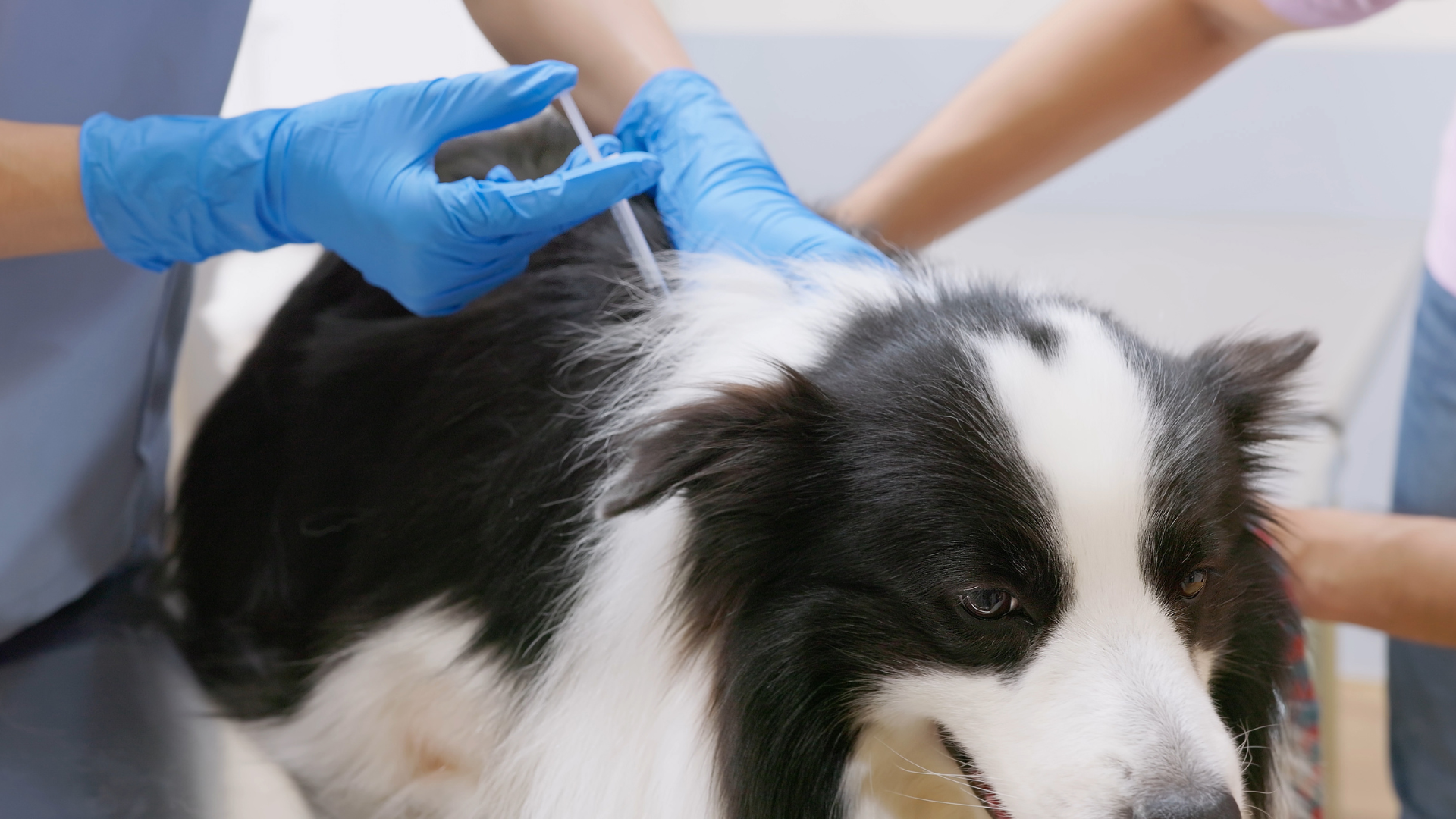
Vaccination against kennel cough can reduce the risk of infection, significantly weaken the course, and shorten the duration of the illness. It is particularly recommended for dogs with a high risk of infection, for example, if they regularly attend dog training, stay in boarding kennels, or participate in dog shows. Accordingly, vaccination is also possible on short notice before a risk situation.
Immunity lasts for varying lengths of time depending on the vaccine. Generally, an annual booster vaccination against kennel cough is recommended, especially for at-risk dogs. Puppies can be vaccinated as early as three weeks of age.
Kennel cough and puppies
Puppies are particularly susceptible to kennel cough because their immune system is not yet fully developed. An infection can be more severe in young dogs and lead to complications more quickly. Therefore, special caution is advised here.
Puppies should, if possible, avoid unnecessary contact with many unfamiliar dogs as long as their vaccination protection is not fully established. Hygiene, a clean environment, and low-stress conditions play a major role.
Difference between kennel cough, bronchitis, and canine flu
These three terms are often used synonymously, even though there are differences. Kennel cough is the term for the infectious disease complex of the upper respiratory tract. Infectious tracheobronchitis describes the inflammation of the trachea and bronchi.
Bronchitis can also be non-infectious, for example due to irritants. Canine flu is more of a colloquial term and usually refers to a severe course of kennel cough with pronounced general symptoms.
Prevention and hygiene in everyday life
You can do a lot to lower the risk of kennel cough in dogs. While an infection can never be completely ruled out, good hygiene and a strong immune system are decisive.
Important measures include:
-
Regular cleaning of dog toys and bowls
-
Avoiding close contact with coughing dogs
-
Sufficient recovery phases after stressful situations
-
Good air quality in indoor spaces
-
Vaccinations in consultation with the vet
You yourself can also help not to transmit pathogens by washing your hands and changing your clothes after contact with unfamiliar dogs.
When should you be particularly attentive?
In most cases, kennel cough in dogs is harmless. Nevertheless, there are situations where you should be particularly attentive. These include:
-
Persistent cough lasting several weeks
-
High fever
-
Shortness of breath
-
Severe lethargy
-
Puppies or older dogs
-
Suspected pneumonia
In such cases, a prompt examination by the vet is important to avoid serious consequences.
Conclusion: Assessing kennel cough in dogs correctly
Kennel cough is a widespread infectious disease of the respiratory tract in dogs. Triggered by viruses and bacteria, it spreads quickly where many dogs gather. Typical symptoms are coughing, a coughing reflex, and occasionally fever or lethargy.
With the right handling, sufficient rest, and, if necessary, veterinary treatment, the disease usually resolves well. Vaccination can reduce the risk and mitigate the course, but it does not replace attentiveness and hygiene.
If you recognize the symptoms early and act responsibly, you protect not only your own four-legged friend but also other dogs from infection.