
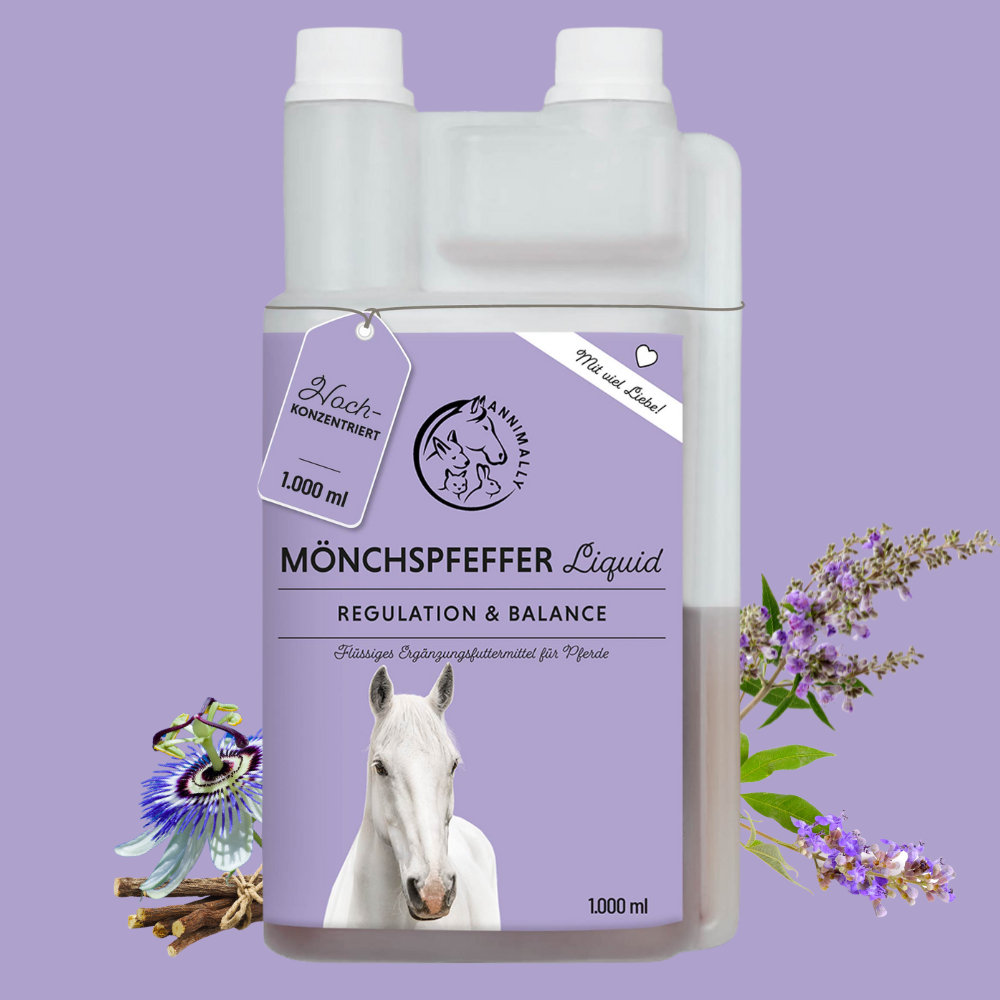
Chasteberry for horses – Natural support for hormone balance, behavior and well-being
Have you ever heard of chasteberry for horses? Perhaps in connection with hormonal problems in mares or noticeable behavior in geldings or stallions? Then you have come to the right place.
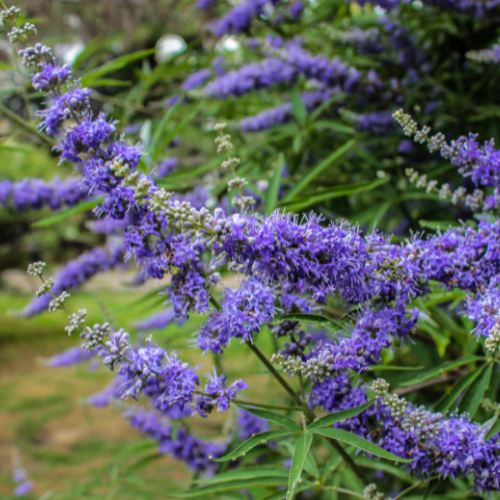
Chasteberry – also known as Agnus castus – is a time-tested herbal remedy that was already being used by monks in the Middle Ages. Today, it is experiencing a renaissance in modern equine nutrition – and rightfully so.
In this blog article, you will learn what chasteberry is, how it affects horses, which horses it is suitable for, and how best to feed it. We will also cover important topics such as anti-doping, its effect on hormonal metabolism, and its use in Cushing's syndrome.
What actually is chasteberry – and why "monk's pepper"?
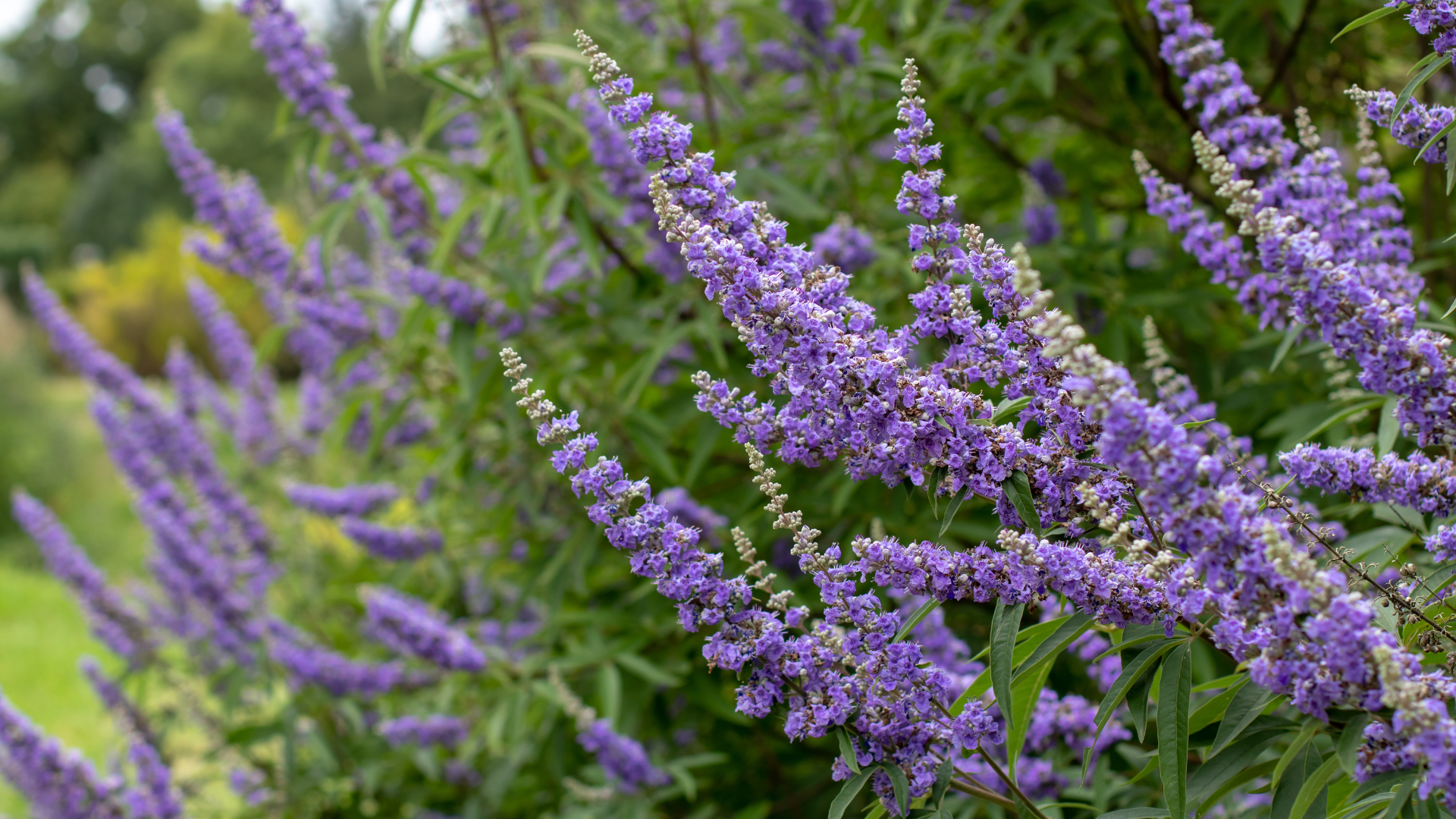
The chaste tree is originally from the Mediterranean region. Its fruits – small, black grains – look like peppercorns at first glance, which earned it its name. Monks made use of its effects as early as the Middle Ages. They used the herb to curb their own sex drive – hence the name "chaste tree" or "monk's pepper."
What was known through experience back then is now proven by studies: the ingredients of chasteberry influence the hormonal balance – in both humans and animals. This is particularly interesting for horses that suffer from behavioral abnormalities, physical complaints, or a disturbed heat cycle due to hormonal fluctuations.
How does chasteberry work in horses?
Chasteberry acts on the hypothalamus-pituitary complex, the hormonal control center in the brain. There, it can regulate the secretion of certain hormones – primarily prolactin and dopamine. As a result, it can perform a balancing function in cases of hormonal imbalances.
The most important effects in horses:
-
Regulation of hormonal metabolism
-
Stabilization of the hormonal balance
-
Reduction of mood swings
-
Support for heat-related problems
-
Calming of stallion-like geldings
-
Positive influence on cortisol levels in Cushing's
-
Gentle aid without synthetic additives
Chasteberry is not a hormone preparation, but a natural straight feed made from herbs. You are supporting your horse's body in a gentle way – without overwhelming it or risking unwanted side effects.
Which horses is chasteberry suitable for?
Chasteberry is a great addition to the diet for many horses – especially when hormonal or behavioral problems are present. Here are some typical areas of application:
1. Mares with heat problems
Many mares suffer from an unbalanced heat cycle, show sensitivity to pain in their backs, react aggressively toward other horses, or are suddenly no longer rideable. An uneven hormonal metabolism is often behind this. Chasteberry can help regulate the heat cycle, harmonize behavior, and improve mobility.
2. Stallion-like geldings
Not every gelding is "like a new horse" after castration. Some continue to show stallion-like behavior, react strongly to mares in heat, or act dominantly. Chasteberry can help to gently dampen the behavior of these "stallion-like geldings" and bring more calm back into their everyday lives.
3. Stallions with a strong sex drive
Chasteberry can also have a supportive effect on stallions with a pronounced sex drive. It mitigates the hormonal imbalance without suppressing the horse's natural vitality. This can make everyday handling safer and more relaxed.
4. Horses with Cushing's syndrome (PPID)
Cushing's syndrome is a chronic disease in which cortisol levels are permanently elevated. Cortisol – a stress hormone – influences numerous metabolic processes in the body and can cause serious symptoms when present in excess. Horses with Cushing's often show coat changes, muscle wasting, susceptibility to infections, and laminitis. Studies show that chasteberry can help regulate cortisol levels, mitigate the effects of excess cortisol, and relieve the burden on the hormonal metabolism – however, it does not replace veterinary treatment.
How do you feed chasteberry correctly?
Chasteberry is available in various forms – as pure powder, as coarsely cut herbs, or as an ingredient in mixed products. It is important that you choose a product without sugar, unnecessary additives, or preservatives.
Dosage (feeding recommendation):
-
Small horses & ponies: approx. 5–10 g per day
-
Large horses: approx. 15–20 g per day
It is best to mix the powder into the concentrate feed or a mash. Some horses like the taste of chasteberry immediately, others need a little time to get used to it. You can also lightly moisten the powder so that it sticks better.
Tip: Give the chasteberry at least 3–4 weeks to take effect. For persistent problems, you can use it over several months or permanently.
Chasteberry and anti-doping – what you need to know
Even though chasteberry is a purely natural product, it is considered doping-relevant according to the German Equestrian Federation (FN). This means: In tournament sports, it must not be given during competition. A waiting period of at least 48 hours is recommended, or even longer if in doubt.
So, if you compete in tournaments, be sure to pay attention to the ADMR compliance of your feed. In case of doubt, talk to your veterinarian or contact the FN directly for the currently valid rules.
How do you recognize a high-quality chasteberry product?
A good chasteberry product for your horse should:
-
Contain 100% Agnus castus
-
Have no preservatives or added sugars
-
Be declared as a straight feed
-
Have a good crude fiber structure (in the case of herbs)
-
Be finely ground (in the case of powder) for better bioavailability
Depending on your preference, you can choose between powder or coarse herbs. It is important that the ingredients have been processed gently to preserve the valuable active substances.
How long can you feed chasteberry?
Chasteberry can be fed both short-term as a cure or long-term/permanently – depending on the health status and behavior of your horse.
Recommendations:
-
For heat problems: In 6–8 week cycles, then a 2-week break
-
For Cushing's (in consultation with the veterinarian): Permanent administration possible
-
For behavioral abnormalities: Test for 3 months, then re-evaluate
As with all herbs, the following applies: every organism reacts individually. Observe your horse closely – especially during the acclimation phase.
What effect does chasteberry have on other parts of the horse's body?
In addition to the influence on hormonal metabolism, chasteberry also indirectly affects other bodily systems:
-
Skin and coat: often shinier due to a better hormonal balance
-
Hooves: in Cushing's patients, the tendency to laminitis can be reduced
-
Liver: relieved by hormonal balance
-
Behavior: calmer, more composed, more balanced
Respiratory tract: often more stable due to the strengthening of the immune system
These effects do not arise directly from the chasteberry itself, but through the improved hormonal balance, which affects many processes in the body.
Conclusion: Natural support for your horse with chasteberry
Chasteberry is a natural helper from herbal medicine that has been valued for centuries – not only in humans, but also in animals. Especially in horses, it can be a valuable support for hormonal imbalances, behavioral problems, Cushing's symptoms, and heat-related complaints.
If you choose a high-quality chasteberry product, pay attention to the correct dosage, and observe how your horse reacts, you can achieve a gentle and sustainable improvement in well-being with chasteberry.