

Sweet whey for dogs: What you should know about the versatile byproduct of cheese production
Have you ever heard of sweet whey for dogs? Perhaps you have come across the term in connection with whey powder, cheese production, or products that contain milk in general.
In this article, you will learn everything you need to know about sweet whey, its ingredients, benefits, its use as a supplement in dog food, and the facts about its lactose content – including tips for proper use for your four-legged friend.
What exactly is sweet whey?
Sweet whey is a byproduct of cheese production, specifically the production of hard and semi-hard cheese from whole or skimmed milk. Unlike acid whey, which is created during the production of cream cheese or quark, sweet whey is a milder variant with a higher content of milk sugar (lactose) and less acid.
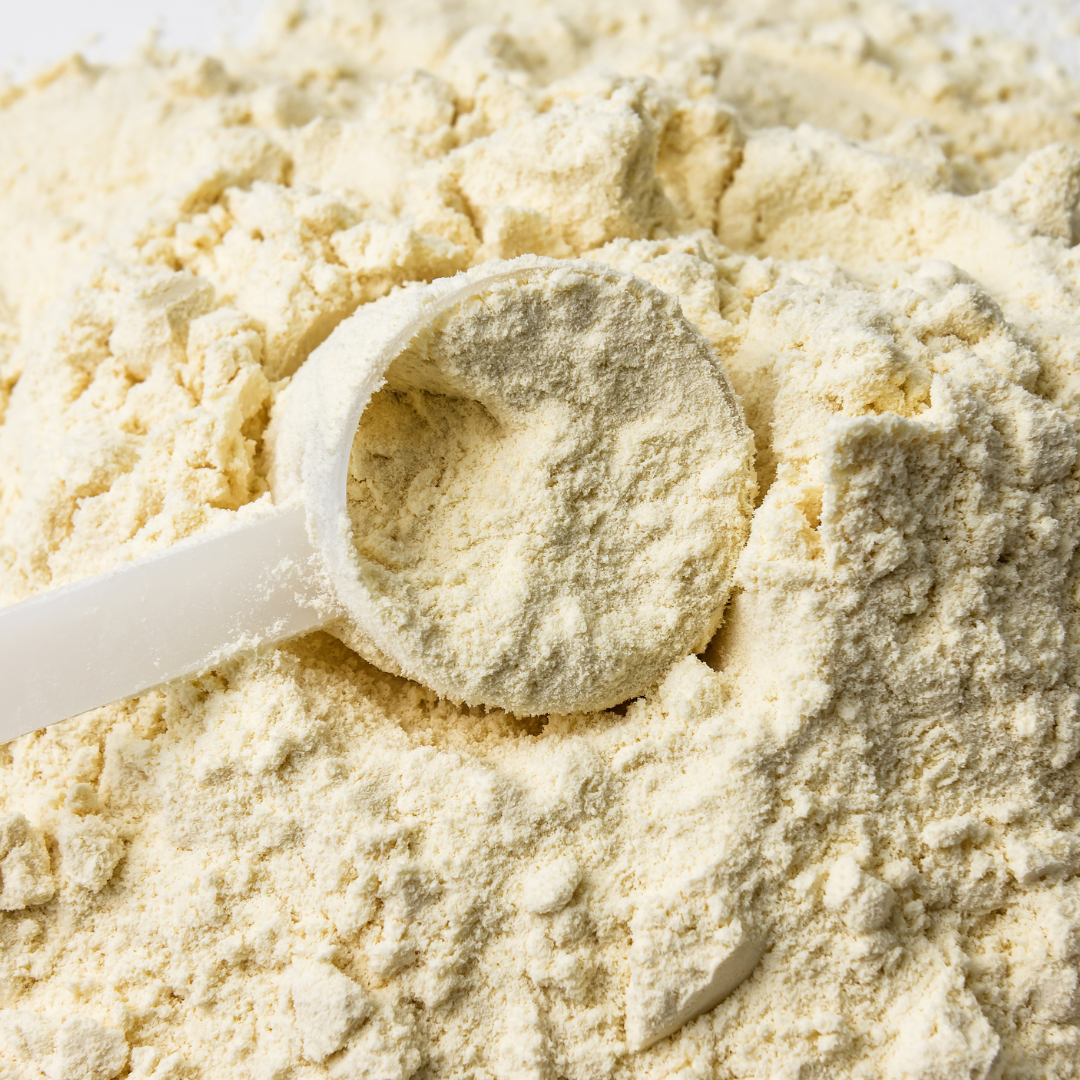
This yellowish, liquid product consists largely of water, but also contains valuable proteins, vitamins, minerals, and amino acids such as tryptophan. To make the whey shelf-stable and easier to dose, it is frequently offered as a powder – so-called sweet whey powder.

Is sweet whey suitable for your dog?
The good news: Yes, sweet whey can be a valuable addition to your four-legged friend's daily diet – though only in moderation and in an appropriate form. Due to its natural lactose content, you should check whether your dog tolerates lactose. Many can process small amounts of milk sugar well, while others are sensitive to it.
Therefore, sweet whey powder is recommended, which you can add in measured amounts to food or drinking water. Look for a high-quality product, preferably without additives such as sugar or artificial ingredients.
What are the benefits of sweet whey?
It is packed with good ingredients that can help your dog in many ways:
1. Protein source
Whey contains high-quality protein, which is important for muscle building, cell regeneration, and the immune system. Active or older dogs in particular benefit from this addition to their food.
2. Rich in vitamins and minerals
In addition to vitamin B, calcium, magnesium, and potassium, sweet whey provides important building blocks for bones, nerves, and metabolism.
3. Tryptophan for well-being
The amino acid tryptophan is a precursor to the "happiness hormone" serotonin and can help reduce stress and restlessness in your dog.
4. Good tolerance (with low lactose)
When dosed correctly and in animals with healthy digestion, whey powder is well tolerated. If necessary, you can use products with reduced lactose content.
5. Digestive support
The enzymes and milk sugar it contains can have a positive effect on the intestinal flora, which is particularly helpful after illness or for sensitive dogs.

How is sweet whey powder produced?
To produce sweet whey powder, fresh sweet whey from cheese production is filtered, heated, and then gently dried. What remains is a fine powder that has a long shelf life and can be easily dosed. The dry matter contains all the valuable nutrients in concentrated form.
When choosing, look for:
-
high quality (food grade, no industrial waste),
-
no additional ingredients,
-
low lactose content (if your dog is sensitive),
-
transparent declaration of all ingredients.
Application and dosage
Depending on your dog's body weight and the product, you should start with a small amount. Often 1–2 teaspoons daily are sufficient, dissolved in a little water or mixed into the food.
An example:
-
Small dogs (up to 10 kg): 1 tsp daily
-
Medium dogs (10–25 kg): 1–2 tsp daily
-
Large dogs (from 25 kg): up to 1 tbsp daily
When in doubt, talk to your veterinarian, especially if your dog already has special dietary requirements.
Can cats have sweet whey too?
In principle, yes, but lactose is often a bigger problem for cats. Most adult cats tolerate dairy products poorly, which is why you should look for whey powder developed specifically for cats or lactose-free variants. Here, too, the rule applies: always start small and observe how your cat reacts.
Conclusion: Sweet whey as a healthy supplement for your dog
Sweet whey is more than just a byproduct of cheese production. In the form of sweet whey powder, it can be a natural, nutrient-rich supplement for your dog – provided you pay attention to quality and dosage.
With its high content of proteins, amino acids, vitamins, and a mild taste, whey is ideal for active dogs, seniors, animals with sensitive digestion, or simply as a change of pace in the bowl. Check for tolerance, start with small amounts, and do something good for your four-legged friend – entirely without artificial additives.
Tip: When buying, look for high-quality products without hidden sugar or unnecessary additives. The purer the powder, the better the effect for your dog!