
Chondroitin for Dogs: Everything for Healthy Joints
Your dog's health is close to your heart – and joint health can become a challenge, especially in old age. Age-related wear and discomfort often become apparent, particularly in larger breeds or dogs genetically predisposed to joint issues.
A proven remedy to specifically support joints and protect them from excessive wear is chondroitin sulfate. This natural supplement can help alleviate joint problems and slow down cartilage breakdown, allowing your dog to remain active and pain-free for longer.
Here, you will learn in detail what chondroitin sulfate is, how it works, when it makes sense to administer it, and how to choose the right product for your four-legged friend.

What is chondroitin and why is it important?
Chondroitin is a natural component of cartilage tissue and helps keep joint structures elastic and shock-absorbing. For joint problems that often arise from wear and tear or genetic predisposition, it can be a valuable supplement for dogs. It helps slow down cartilage breakdown and supports the regeneration of joint cartilage.
Why do dogs need chondroitin?
Your dog's joints are exposed to a great deal of stress every day – whether they are running through the garden, climbing stairs, or playing with you. As dogs age, their body's own production of chondroitin often decreases, and joint structures begin to suffer.
By giving chondroitin as a supplement, you can specifically support your dog's joints and help them remain mobile and pain-free.
Signs that your dog has joint problems
How can you tell if your dog needs joint support? The following signs may indicate that they could benefit from chondroitin:
-
Your dog has difficulty standing up.
-
They are hesitant to climb stairs or jump into the car.
-
Limping and stiffness, especially after waking up or a long period of rest.
-
A noticeably decreased desire to move and general lethargy.
-
Pain when touching the joints or the joint area.
How chondroitin works in dogs
Chondroitin supports the regeneration of joint cartilage and has an anti-inflammatory effect. It helps improve the production and function of synovial fluid, which in turn lubricates the joints and facilitates the interaction of the bones. As a result, it can also reduce pain associated with joint diseases such as osteoarthritis.
The combination of chondroitin and glucosamine: A powerful duo
Chondroitin is often administered in combination with glucosamine. While chondroitin prevents cartilage breakdown and has an anti-inflammatory effect, glucosamine promotes the formation and repair of cartilage tissue. Together, they help to comprehensively protect your dog's joints and alleviate discomfort.
MSM and its role in joint health
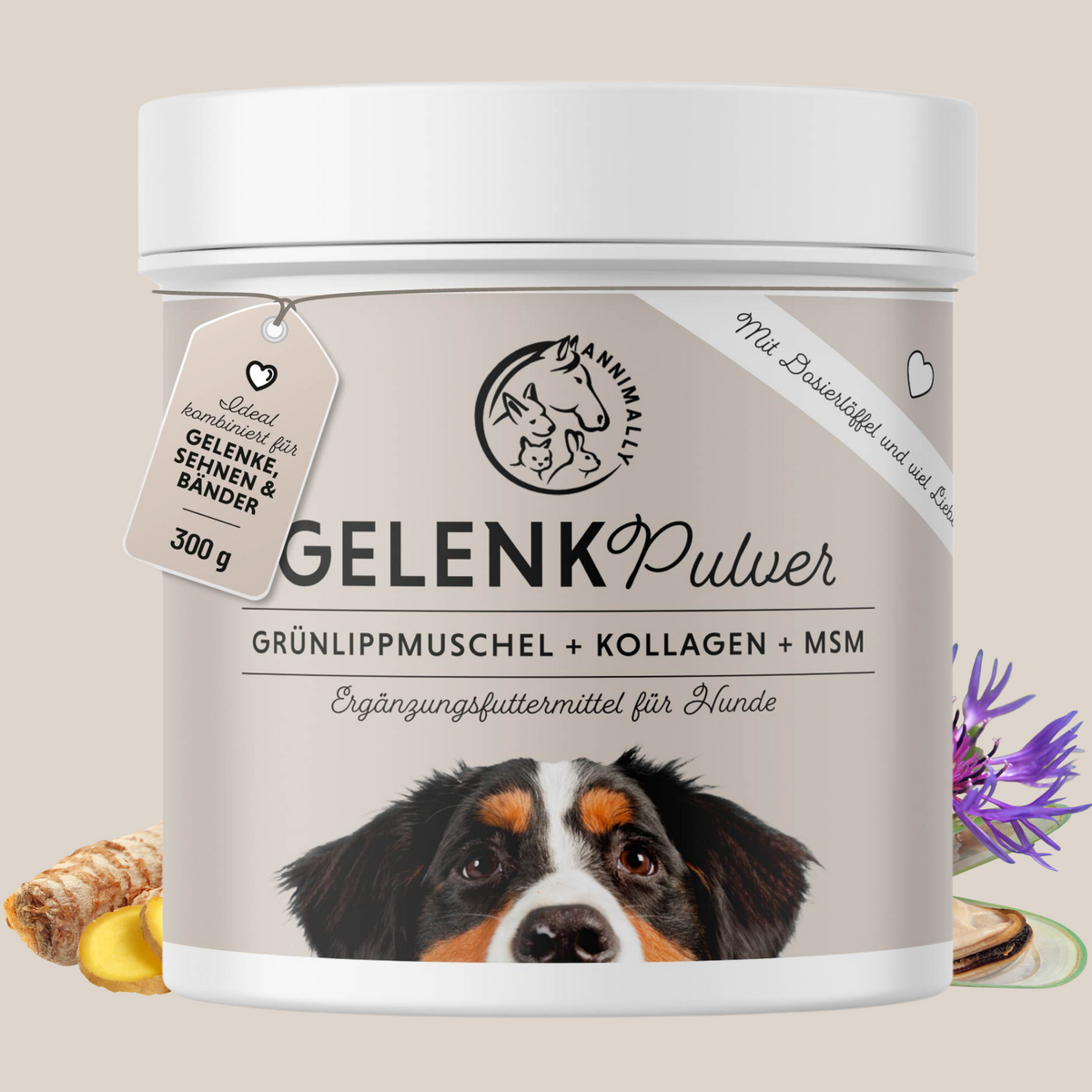
In addition to chondroitin and glucosamine, you will often find MSM (methylsulfonylmethane) in joint supplements for dogs. MSM is a natural sulfur compound that has anti-inflammatory properties and can improve the absorption of other active ingredients. Due to its anti-inflammatory effect, MSM is particularly helpful for dogs with chronic joint pain.
Benefits of chondroitin for your dog's joints
Some of the most important benefits of chondroitin for dogs include:
Support for joint health: It promotes healthy cartilage structure and contributes to mobility.
Relief of inflammation and pain: With regular administration, joint inflammation can decrease, thereby alleviating pain.
Slowing down cartilage breakdown: It protects cartilage from wear and tear, which is especially important for older or very active dogs.
The right dosage: How much chondroitin does your dog need?
The amount your dog needs depends on various factors, including their weight, age, and state of health. As a rule, dosage recommendations are provided on the products. Use these as a guide, and when in doubt, consult your veterinarian to ensure the dose is optimally tailored to your dog.
How to administer chondroitin correctly
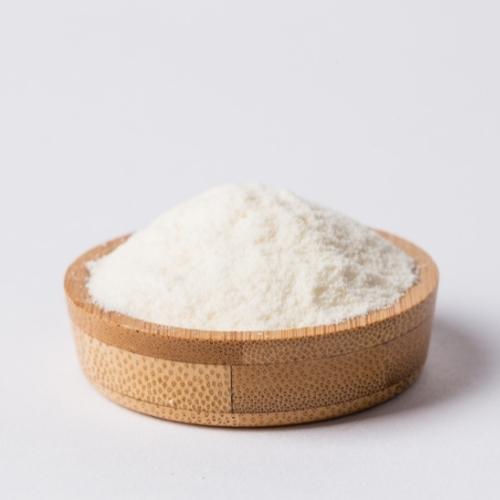
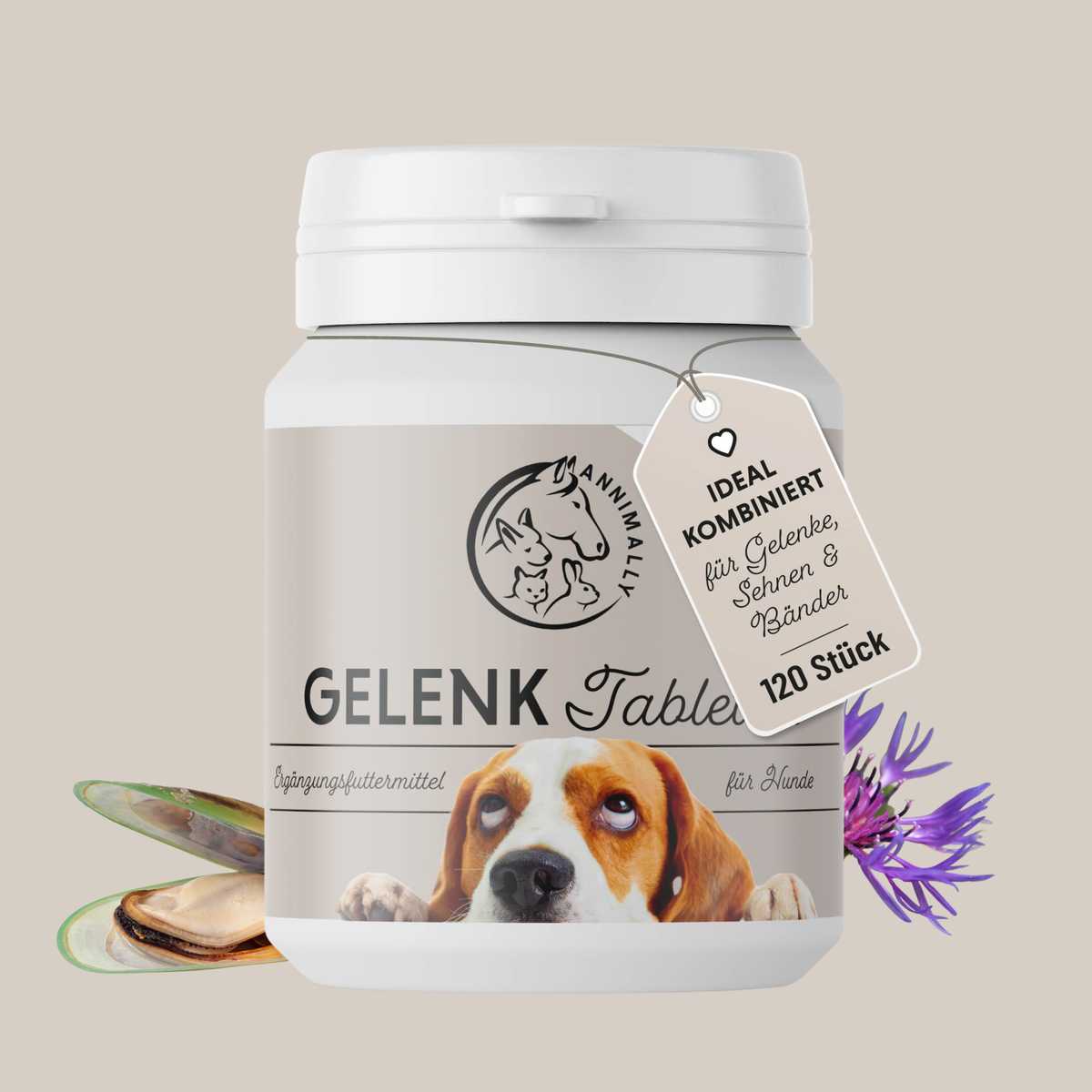
Chondroitin is available in various forms: as tablets, powder, and capsules. Most dog owners find that the powder is easiest to administer, as it can simply be mixed into food. Capsules and tablets can be given directly or offered as a "treat."
How to recognize high-quality chondroitin supplements
There are many chondroitin products on the market, but not all are equally effective or high-quality. Here are a few tips on what to look for:
Quality of ingredients: The chondroitin for dogs should come from a reliable source and be specifically formulated for dogs.
Free from unnecessary additives: Make sure there are no artificial colors, flavor enhancers, or preservatives.
Transparent origin: Products from Germany or the EU are subject to strict quality controls and are often safer.
Are side effects to be expected?
Although chondroitin is well-tolerated by most dogs, some may experience mild side effects such as gastrointestinal upset. Monitor your dog closely when first administering it and speak to your veterinarian if any unusual reactions occur.
Long-term benefits of chondroitin for older dogs
Especially in older dogs, chondroitin helps improve mobility and quality of life. Osteoarthritis and age-related joint problems can be mitigated through regular use. Chondroitin is also a valuable supplement for athletic or very active dogs to protect their joints from wear and tear.
Complementary measures to support joints
In addition to chondroitin, there are other measures that can promote your dog's joint health:
Moderate exercise: Regular, gentle exercise such as walks helps keep joints supple.
Weight control: A healthy weight reduces pressure on the joints.
Warmth: Warming blankets and special beds can help keep joints supple, especially in older dogs.
Conclusion: A life of active health for your dog with chondroitin
Chondroitin is a valuable building block for supporting your dog's joint health. Whether in combination with glucosamine and MSM or on its own, it can promote your four-legged friend's mobility and relieve pain.
If you choose a high-quality product and follow the correct dosage, chondroitin can be a great help in enabling your dog to live an active life even in old age.